The curator of this section of the biennale is Zulfikar Filandra, a young and promising visual artist with a specific focus on video art, whose approach to selecting works for the biennale concentrated on avant-garde video production.
It is important to emphasize that the guiding principle for the selection was the biennale’s host city—Sarajevo—and its labyrinthine structure and topography. The structure of the labyrinth was not chosen as an accidental form; it reflects the complex relationship between the external and the internal.
"The labyrinthine structure of the city of Sarajevo provokes a curatorial approach to the world and to authors today: looking at the world from the outside as we usually conceive it is (perhaps) outdated, (perhaps) unjustified. Seeking the world within ourselves is better formulated as seeking ourselves within the world," says Filandra.
Explaining his selection process, Filandra points out that the Sarajevo audience has the opportunity to see the works of contemporary video artists for the first time.
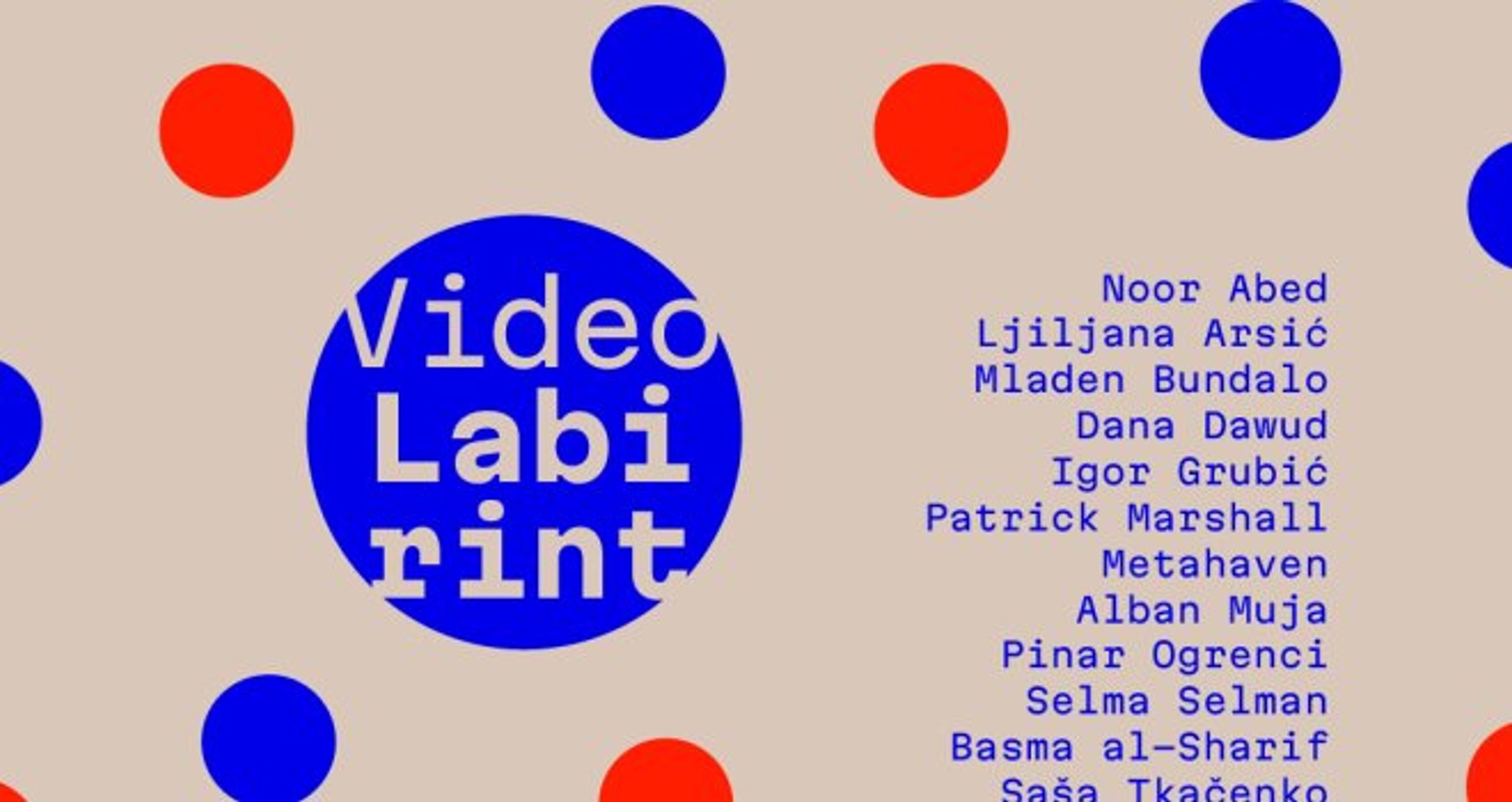
"The international aspect of the SubDokumenta Sarajevo '25 biennale has been fully embraced, and through the Video Labyrinth, the Sarajevo audience is seeing for the first time works by people who have not exhibited here before. They have the opportunity to reflect on the legacy of the last 'documenta' in Kassel from 2022, and most importantly—they get the chance to see relevant contemporary authors who have never been paired together before (such as Noor Abed, Basma al-Sharif, and Dana Dawud, three of the most important contemporary Palestinian video artists who have never exhibited together), and they should have been, from the position of a city that has the courage to invite and gather them," Filandra notes.
Adapting his curatorial selection to the thematic and medial diversity of the biennale, he based his approach to selecting contemporary video art on the thematic variety of the artists and their artistic subjects. Given the complex past of the host city, it was unquestionably important to select works that tematize war and the wartime experience.
"Several works are about War with a capital 'W' (Noor Abed, Patrick Marshall, Sage Ó Tuama, Dana Dawud), several works are about memories and the post-war world (Selma Selman, Miloš Trakilović, Alban Muja, Ljiljana Arsić), several works are about capitalism/fascism (Pinar Ogrenci, Basma al-Sharif, Igor Grubić), and several works are about language (Saša Tkačenko, Metahaven, Mladen Bundalo). All these themes are, in my opinion, themes of Sarajevo—a mirror of reflection, a labyrinth of mirrors of our experience and our strange and important city," Filandra concludes.